
You will need:
- Cloth
- Towel
- Vinegar
- Water
- Undiluted vinegar
There’s plenty of advice for homeowners regarding mould prevention tips and cleaning suggestions, but much of this advice focuses on mould found in bathrooms and kitchens. Very few guides explain how to deal with mould in wardrobes, and many people do not realise this is something they should check regularly.
Mould in wardrobes usually develops because of two main factors: condensation and damp clothing. So how do you get rid of it? Here is your guide to understanding this type of mould and preventing it for good.
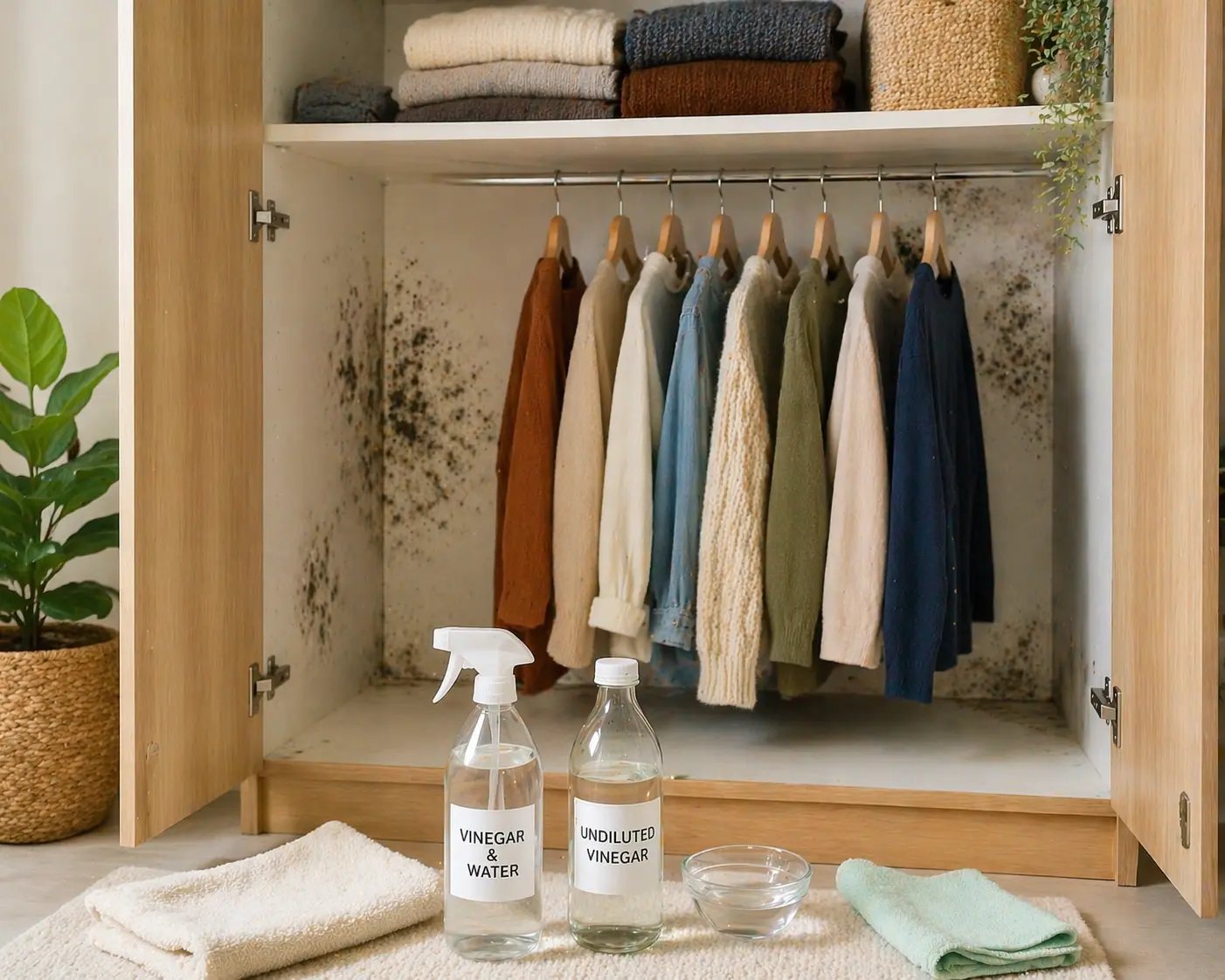
Why should damp in wardrobe furniture not be ignored?
It is always better to prevent damp in your wardrobe in the first place. However, if you notice damp inside wardrobe furniture or in other areas of your home, it should never be ignored.
Damp often leads to mould growth, which may cause or worsen health problems such as chest tightness, coughing, or even asthma in severe cases. Some age groups are more vulnerable than others, but it is never worth the risk.
Some people also suffer from mould allergies, and their reactions may be more serious. In rainy climates, damp and mould can easily thrive in wardrobes, so regular checks are important.
Why does mould in a wardrobe need special attention?
When dealing with bathroom mould, bleach products are often used as a cleaning method. However, when it comes to wardrobes, bleach may not be suitable for certain materials, delicate wood, or protective finishes.
Even when diluted, bleach is a strong substance that may damage the gloss, weaken the wood, or cause discolouration. For wooden surfaces and sensitive materials, it is always best to use the gentlest cleaning solution possible.
This is why preventing mould in wardrobes requires a little extra care.
How to clean mould in the wardrobe safely
- Empty the wardrobe completely and inspect all corners.
- Mix equal parts vinegar and water in a bowl or spray bottle.
- Use a soft cloth to wipe affected areas gently.
- For stubborn spots, apply undiluted vinegar directly.
- Dry the area fully with a clean towel.
- Leave the wardrobe doors open to air out completely.
Extra tips to prevent mould returning
- Never place damp clothes inside the wardrobe.
- Allow airflow by opening wardrobe doors regularly.
- Keep the room ventilated and dry.
- Wipe away condensation as soon as it appears.
- Check hidden corners monthly for early signs of mould.
When treating mould in a wardrobe, always read the directions on the label and test any cleaning product on a small hidden area first.